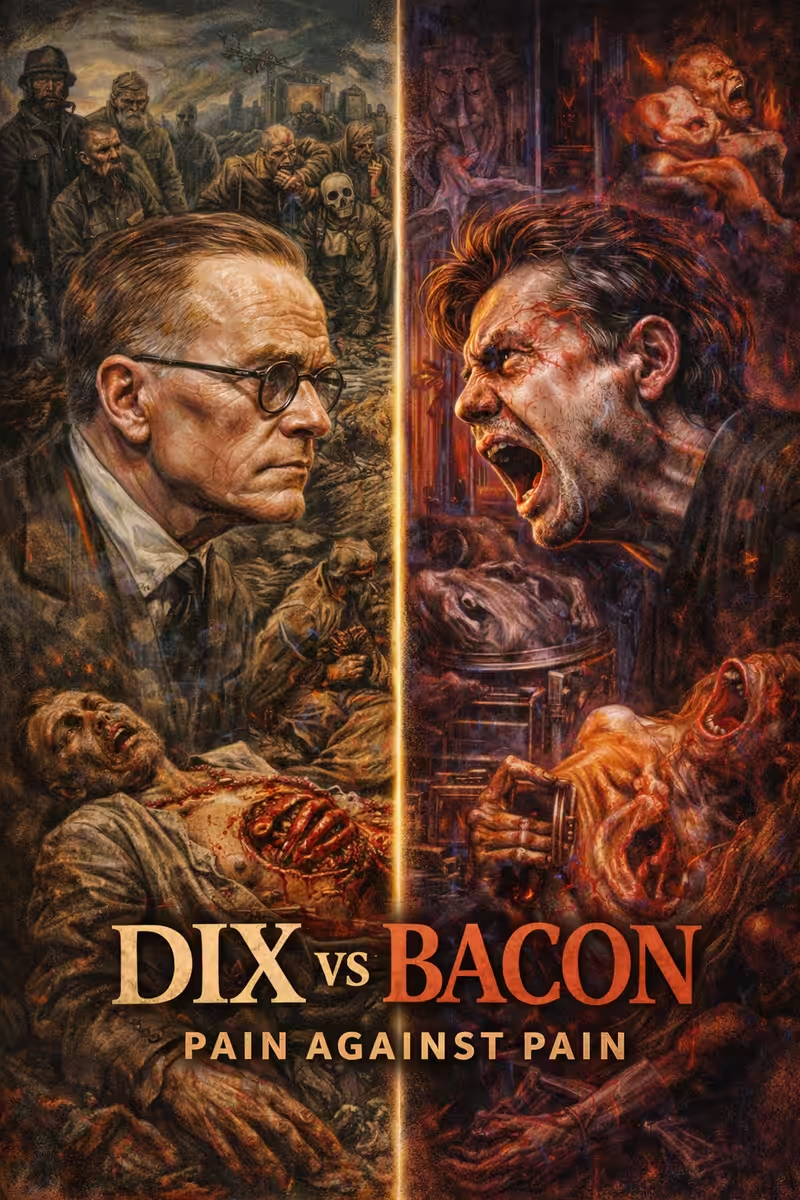
This is not a dialogue. This is a collision. Otto Dix and Francis Bacon do not argue about art. They argue about what remains of the human after history has done its work. Dix paints the body after the disaster. Bacon paints the body during it. Between them lies the collapse of illusion. I. The End of Innocence Dix does not believe in redemption. He documents the corpse of belief. His bodies are not tragic — they are factual. Mutilated, exposed, already processed by war, ideology, and bureaucracy. There is no scream left in Dix. Only evidence. Bacon, by contrast, still believes in impact. He tears the body apart to force sensation back into a numb world. His figures scream not because they hope — but because silence would mean surrender. II. Pain: Meaning or Residue In Bacon, pain is still an event. It happens. It ruptures. In Dix, pain has already happened. What remains is residue. This is the true shift from modernity to the present: from suffering as experience to suffering as condition. Dix shows us the human after pain has lost its climax. Bacon shows us the human desperately trying to make pain matter again. III. Nihilism Without Romance Neither artist offers consolation. But Dix is colder. His nihilism is not philosophical — it is administrative. Bodies reduced to data, uniforms, wounds, types. Bacon’s nihilism is visceral. The body still resists. Still convulses. Still demands attention. Dix knows resistance has already failed. Bacon refuses to accept that knowledge. IV. Politics of the Body Dix exposes how power destroys the body systematically. Bacon exposes how power survives inside the body psychologically. One reveals the machine. The other reveals the trauma it leaves behind. Together, they dismantle the fantasy that the body is private, sacred, or autonomous. The body is a battlefield. And the war never ends. V. After the Scream Bacon’s scream is the last echo of a belief that expression can still interrupt violence. Dix knows better. In Dix, the scream has already been absorbed by history. Silence is not peace — it is normalization. This is the true horror of the contemporary condition: not that we suffer, but that suffering no longer shocks. Final Statement DIX AGAINST BACON is not a choice between two artists. It is a choice between two truths: – that the body still matters enough to scream – or that the body has already been processed beyond meaning This manifesto takes no side. Because nihilism is not an opinion anymore. It is the ground we stand on. And the only remaining question is: Do we still scream — or do we accept the aftermath as permanent? . A MANIFESTO FOR THE BODY AFTER MEANING _ Ali Malek