Digital Disposables
Digital files, as physical goods, are disposable items.
They are not as intangible as they seem. We still have to get rid of them, when we assume they are useless. Once we do it, new space is created, and the cycle repeats.
Digital files, as physical goods, are a trace of who we are. They are part of our past, through the digital interactions they once represented; they are part of our present, in which they are generated perpetually, and they are part of our future, since the (in)voluntary act of storage, eventually implies possible access.
Digital files, as physical goods, need storage. Digital storage capacity transitioned from the physicality of the machine and external hard drives, to the cloud.
Digital, intangibles files, pass from being intangible entities stored into tangible machines, to be intangible entities stored into an intangible entity, the cloud.
However, limits are still present. Even the cloud urges the disposal of useless digital files. The cloud, after all, is finite, determined for now by our economic capabilities to buy more storage space.
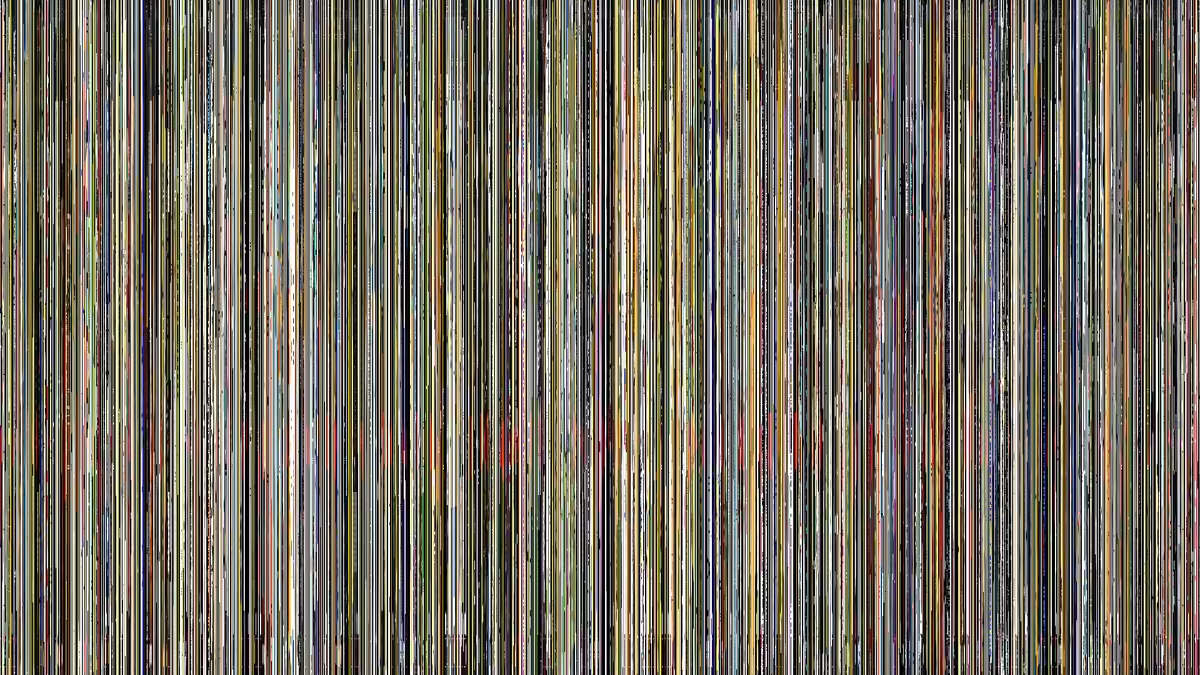
Digital Disposables mimics paper shredders used to destroy private, confidential, or otherwise sensitive documents. Through an algorithm, every image in my laptop's trash bin is reduced to 1 px strip and then stacked horizontally. The result echoes the spirit of creating artworks from disposed materials as in the tradition of Informalism and Materic Art.