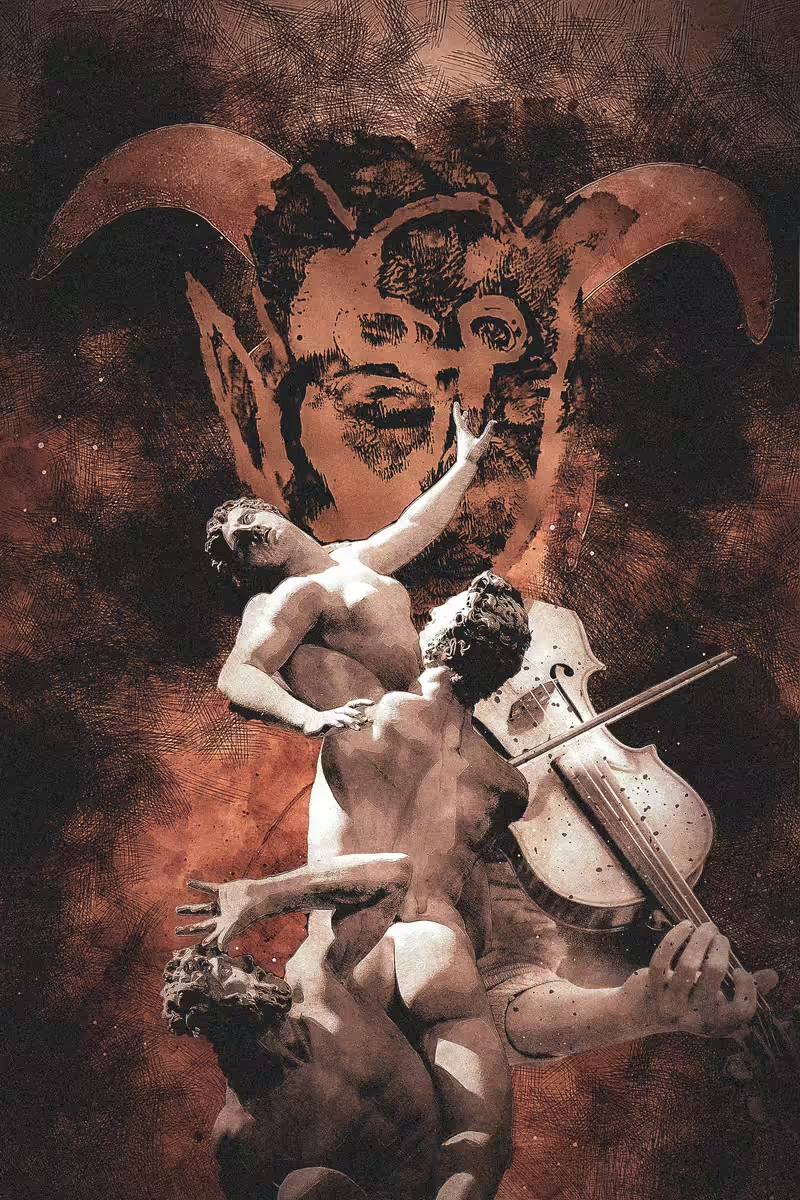
Devil's Trill Sonata
Story is told by Tartini himself in Lalande's Voyage d'un François en Italie:
One night, in the year 1713 I dreamed I had made a pact with the devil for my soul. Everything went as I wished: my new servant anticipated my every desire. Among other things, I gave him my violin to see if he could play. How great was my astonishment on hearing a sonata so wonderful and so beautiful, played with such great art and intelligence, as I had never even conceived in my boldest flights of fantasy. I felt enraptured, transported, enchanted: my breath failed me, and I awoke. I immediately grasped my violin in order to retain, in part at least, the impression of my dream. In vain! The music which I at this time composed is indeed the best that I ever wrote, and I still call it the "Devil's Trill", but the difference between it and that which so moved me is so great that I would have destroyed my instrument and have said farewell to music forever if it had been possible for me to live without the enjoyment it affords me.
Mesmerized by the devil's brilliant and awe-inspiring playing, Tartini attempted to recreate what he had heard. However, despite having said that the sonata was his favorite, Tartini later wrote that it was "so inferior to what I had heard, that if I could have subsisted on other means, I would have broken my violin and abandoned music forever.
The depiction of the devil's face was made with the monoprint technique. Monoprinting is a type of printmaking where the intent is to make unique prints, that may explore an image serially. Other methods of printmaking create editioned multiples, the monoprint is editioned as 1 of 1. There are many techniques of mono-printing, in particular the monotype. Printmaking techniques which can be used to make mono-prints include lithography, woodcut, and etching.