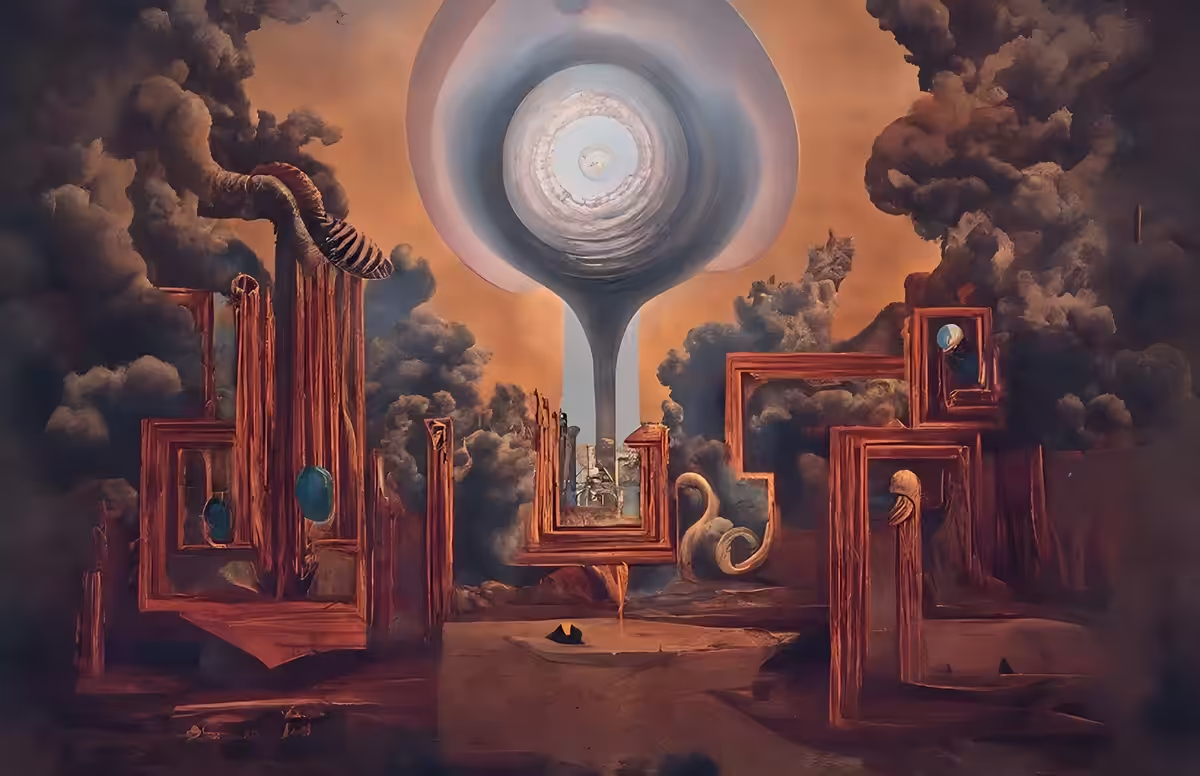
Deep Abyss
In the Bible, the abyss is an unfathomably deep or boundless place. The term comes from the Greek ἄβυσσος, meaning bottomless, unfathomable, boundless. It is used as both an adjective and a noun. It appears in the Septuagint, the earliest Greek translation of the Hebrew Bible, and in the New Testament. It translates the Hebrew words tehom (תהום, deep), tsulah (צולה, sea-deep, deep flood) and rachabh (רחב, spacious place).
In the original sense of the Hebrew tehom, the abyss was the primordial waters or chaos out of which the ordered world was created (Genesis 1:2). The term could also refer literally to the depths of the sea, the deep source of a spring or the interior of the earth.
In a later extended sense in intertestamental Jewish literature, the abyss was the underworld, either the abode of the dead (sheol) or eventually the realm of the rebellious spirits (Hell). In the latter sense, specifically, the abyss was often seen as a prison for demons.
This usage was picked up in the New Testament. Jesus sent the Gadarene swine into the abyss (Luke 8:31) and the beast from the sea (Revelation 13:1) will rise out of the abyss (Revelation 11:7). The locusts—human-animal hybrids—ascend out of the abyss to torment those who do not have the seal of God on their foreheads (Revelation 9:1-11). Paul uses the term in Romans 10:7 when quoting Psalm 71:20, referring to the abode of the dead.