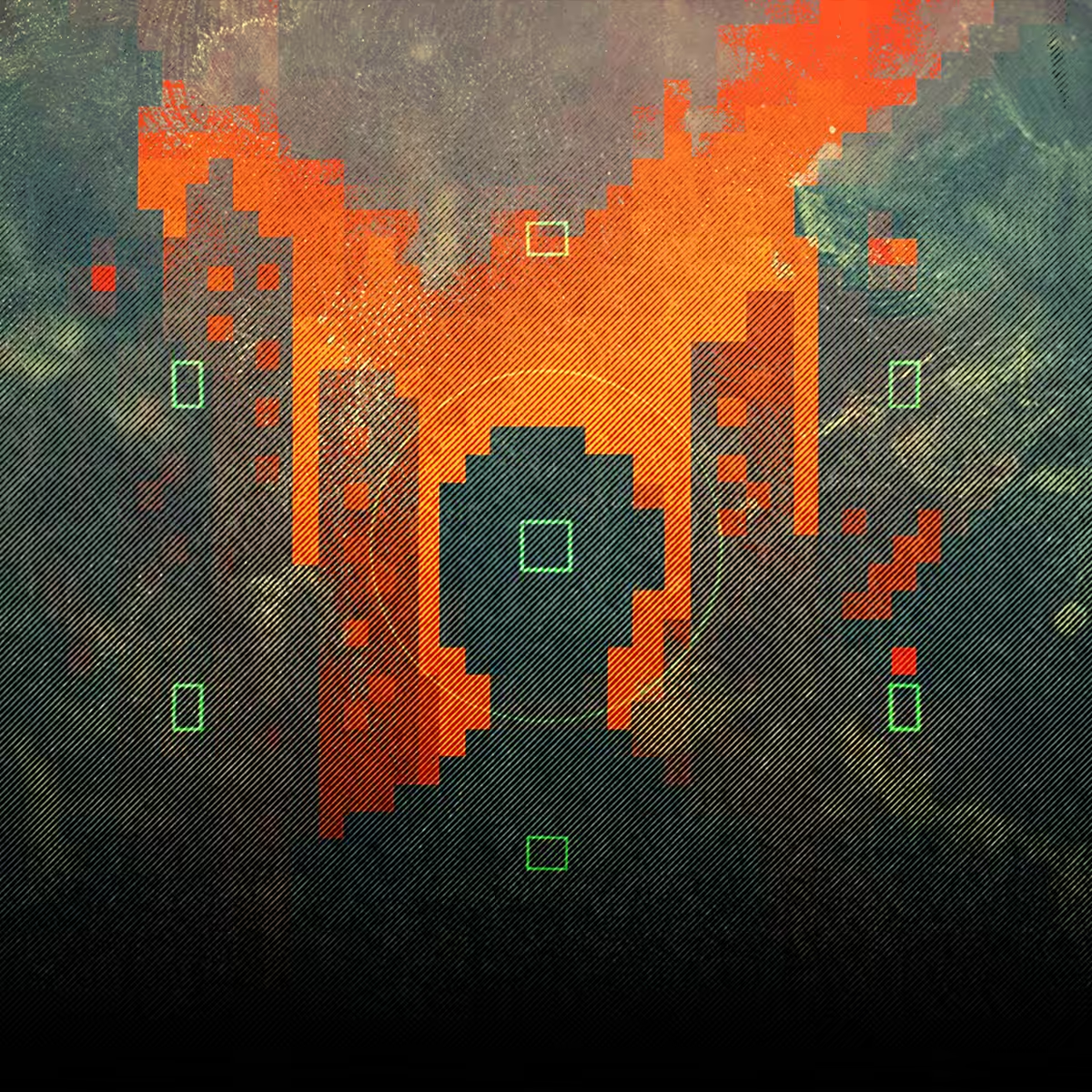
city mistral depicts the city as an entity in combustion, not just physically, but symbolically. At the center, a faceless pixelated human figure is enclosed within a green square, symbolizing surveillance, the focus of an invisible algorithmic lens. This figure has no face, no identity; it is a data point, a shadow indexed, a statistical fragment of a human reduced to metadata.
The background evokes pixelated silhouettes of red skyscrapers, reminiscent of Big Tech towers or data server farms. This visual fusion of city and network blurs the boundaries between physical and digital space, the "figital" realm. The city is both concrete and code.
Scattered across the composition, small green tracking markers, similar to those used in facial recognition systems, overlay the body, the architecture, and even the sky. Everything is observable. Everything is indexable. The pixel art style reinforces the sense of dehumanization, of compressing individuality into the smallest unit of information.
The warm palette of reds and oranges evokes both resistance and collapse, the entropy of an oversaturated system. In stark contrast, the green rectangles are clinical, technological, and inhuman. The tension between these palettes reflects the conflict between life and surveillance, human warmth and the cold logic of neural networks.
The title "city mistral" references the Mistral wind, a powerful, cold force that cuts through cities. Here, it becomes a metaphor for surveillance: a wind that moves through digital and physical alleys, stripping away privacy, intimacy, and the spontaneity of existence.
"city mistral" stands as both a warning and a mirror: in a world of permanent observation, we are all under the lens. Faceless, watchable, and increasingly signal over self.
Made for the discipline "Design for Web 3.0" at Pernambuco's Federal University (UFPE).