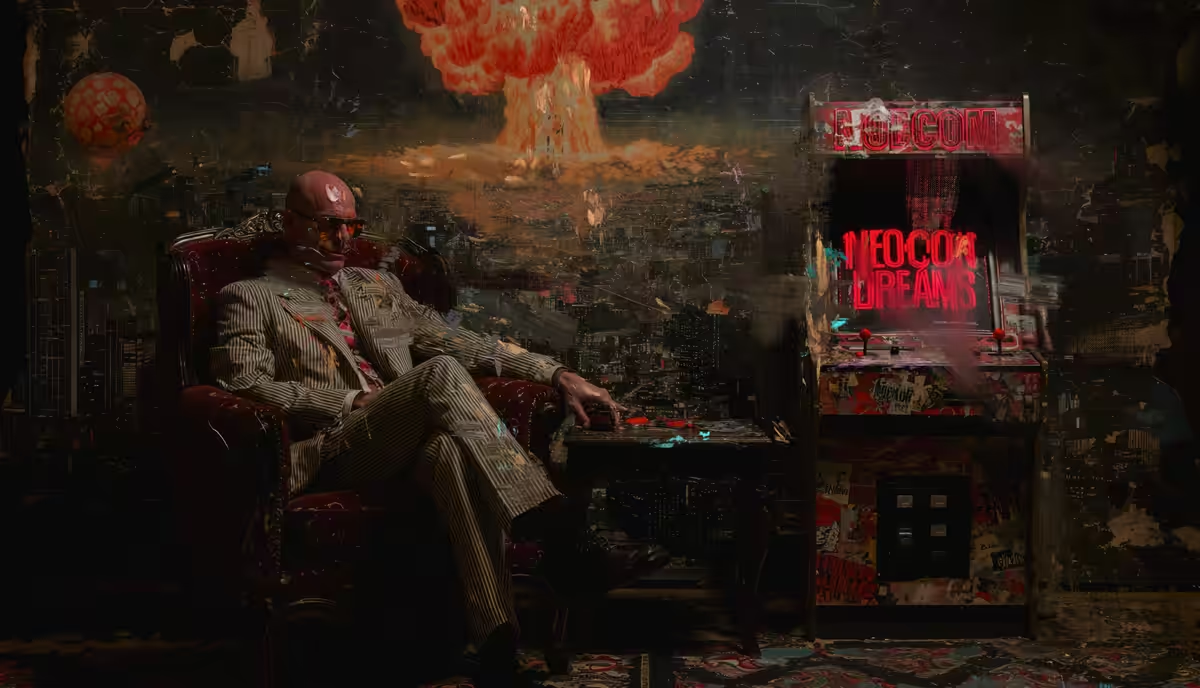
Arcade Neocon Dreams
He sits there, perfectly still, as if the air itself had resigned. The wallpaper behind him carries the image of an atomic explosion, a domesticated apocalypse pressed into pattern. The mushroom cloud blooms in quiet repetition, an infinite reminder that destruction has become decoration. His world is finished, yet impeccably upholstered.
The neocon is not haunted by the bomb, he is its echo, the serene mask of a mind that has made the void into policy. His pinstripe suit, his glassy eyes, the faint reflection of the arcade’s red neon across his cheek, all speak of a man who has rationalized the unthinkable. The machine before him hums with a soft electric pulse, NEOCON DREAMS, its light spills like false salvation across his hand.
This is the theatre of self-assured decay. He no longer believes in consequence, only continuity, the continuation of power through endless destruction, dressed in the language of strategy, progress, and freedom. The bomb behind him is no longer a threat but a memory of control, a relic of a time when fear still had meaning.
He sits inside a world where the apocalypse has been aestheticized, where ethics have dissolved into atmosphere. The painting doesn’t scream, it murmurs, like a ghost that has accepted its condition. And somewhere, between the soft hum of the arcade and the silent detonation on the wall, the neocon dreams, not of victory, but of permanence.