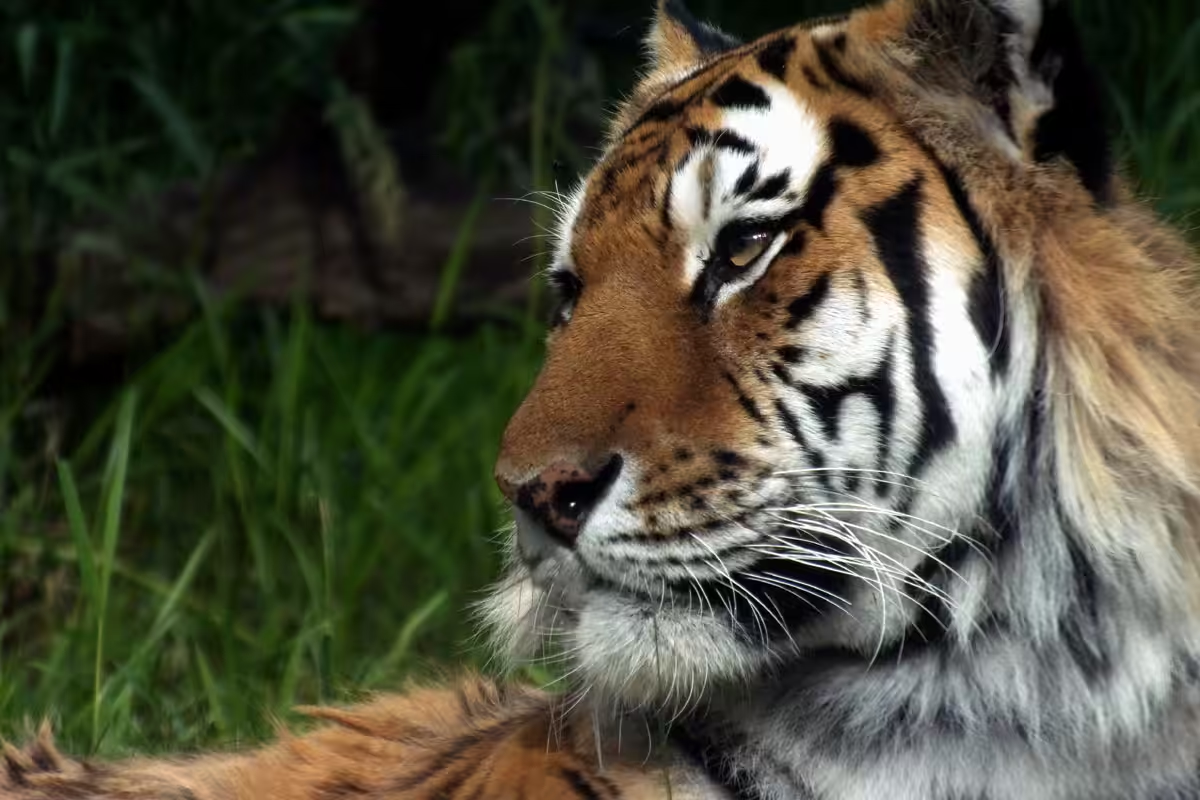
Amur Tiger
Celebrating Global Tiger Day!
Common Name: Amur Tiger Latin Name: Panthera tigris altaica Location: the forests of the Russian Far East and northeast China Conservation Status: Endangered
The Amur Tiger, also sometimes called the Siberian Tiger, is the largest of all cats and one of six remaining tiger subspecies. They are the northernmost subspecies of tiger, with thick fur and padded paws to help protect them from the cold of winter. Their coloring can be lighter than that of other tigers, especially in winter, to help blend in with their snow covered habitat.
In the mid-1900s it is estimated that there were only about 25–30 Amur tigers left in the wild. After the Soviet Union outlawed tiger hunting and actively enforced it, the population grew to about 250. When the Soviet Union dissolved, both tigers and their habitat lost ground. Then zoos and other conservation organizations stepped up to support policing, and tiger numbers again climbed. The most recent IUCN Red List assessment, published in 2022, estimated the population at 265–486 in the Russian Far East with a further small number ranging across the border into China and possibly North Korea.
In 2012 the Association of Zoos and Aquariums tiger Species Survival Plan created the Tiger Conservation Campaign, which focuses on the conservation of Amur, Sumatran, and Malayan tiger populations. In partnership with the Wildlife Conservation Society, these projects work to get at the heart of the crisis, and support and involve local communities in the process. These efforts have raised millions of dollars to directly support the conservation of tigers worldwide.
Photographed at Minnesota Zoo Fujifilm FinePix HS20EXR June 13, 2012