Agoraphobic
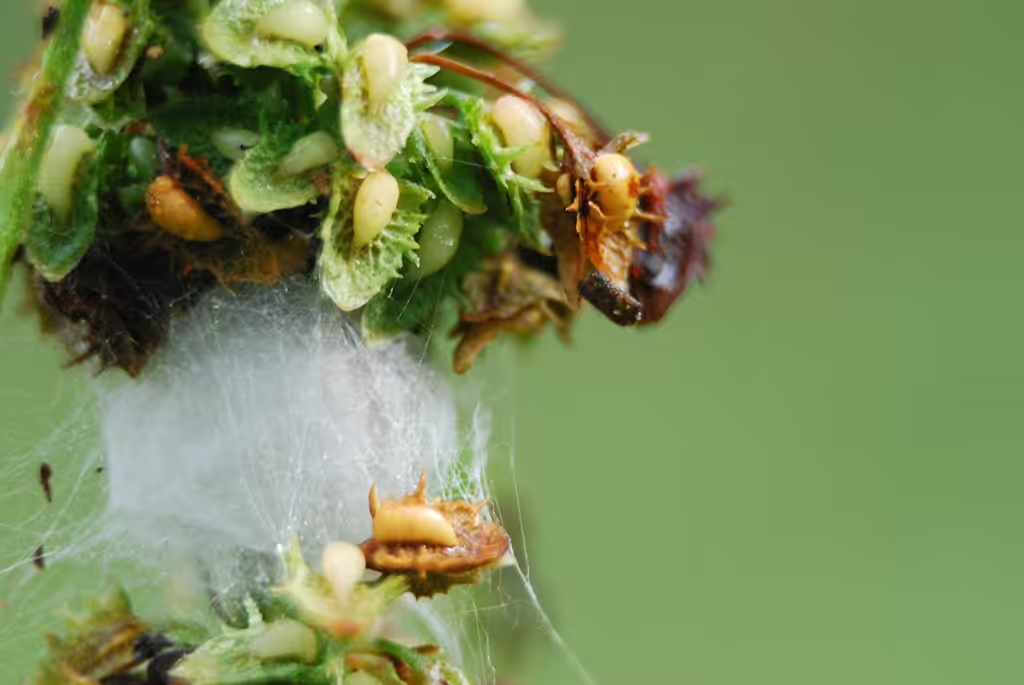
The tightly woven Bold Jumping Spider's web is secured between the stems and seed clusters of Broad-leaved Dock and serves as a protective refuge from predators and the elements. (Phidippus audax - Rumex obtusifolius)
An estimated 1-2 percent of the population is agoraphobic, and it is more prevalent in women, trans and nonbinary people. As a type of anxiety disorder, agoraphobia is based on the need to escape and feel secure. This could include fear or the sympathetic nervous system reaction (fight, fight, feign, faint) from social interactions, being alone, being in a crowd, enclosed spaces and open spaces. It is often associated with trauma and PTSD. It may be enhanced due to either perceived or actual risk.
The parasympathetic nervous system usually resettles and regulates the flight, fight or feign, faint reflex but does not always do so. Those with agoraphobia avoid situations that they feel there is no escape from or a way to find help. Symptoms of this are rapid heart rate, sweating, shaking, chest pain or pressure, dizziness, numbness or tingling chills and outbursts of rage or crying. Secondary symptoms include depression due to social stigma and lack of understanding.
There is a lot of misunderstanding about the condition, its treatments and effects. Agoraphobic people deserve patience, safety and understanding. This makes a big difference in the quality of life for anyone affected.
This piece serves as a collab fundraiser for the Teia Community Donation wallet for the Teia Fountain, so that new artists without the means can start their artistic adventure with this community - like me.
This piece is for fundraising purposes. Shares are split as follows; Malicioussheep - 50 Teia Community Donation - 50 10% Royalties
- Nikon D60, 55-200mm Lens + 68mm Extension Tube.
Photographed in situ, without the use of artificial lighting or staging. Photoshop only used for resizing.
1024x685 300dpi jpeg
Mental Health Series: Part 16 of 20