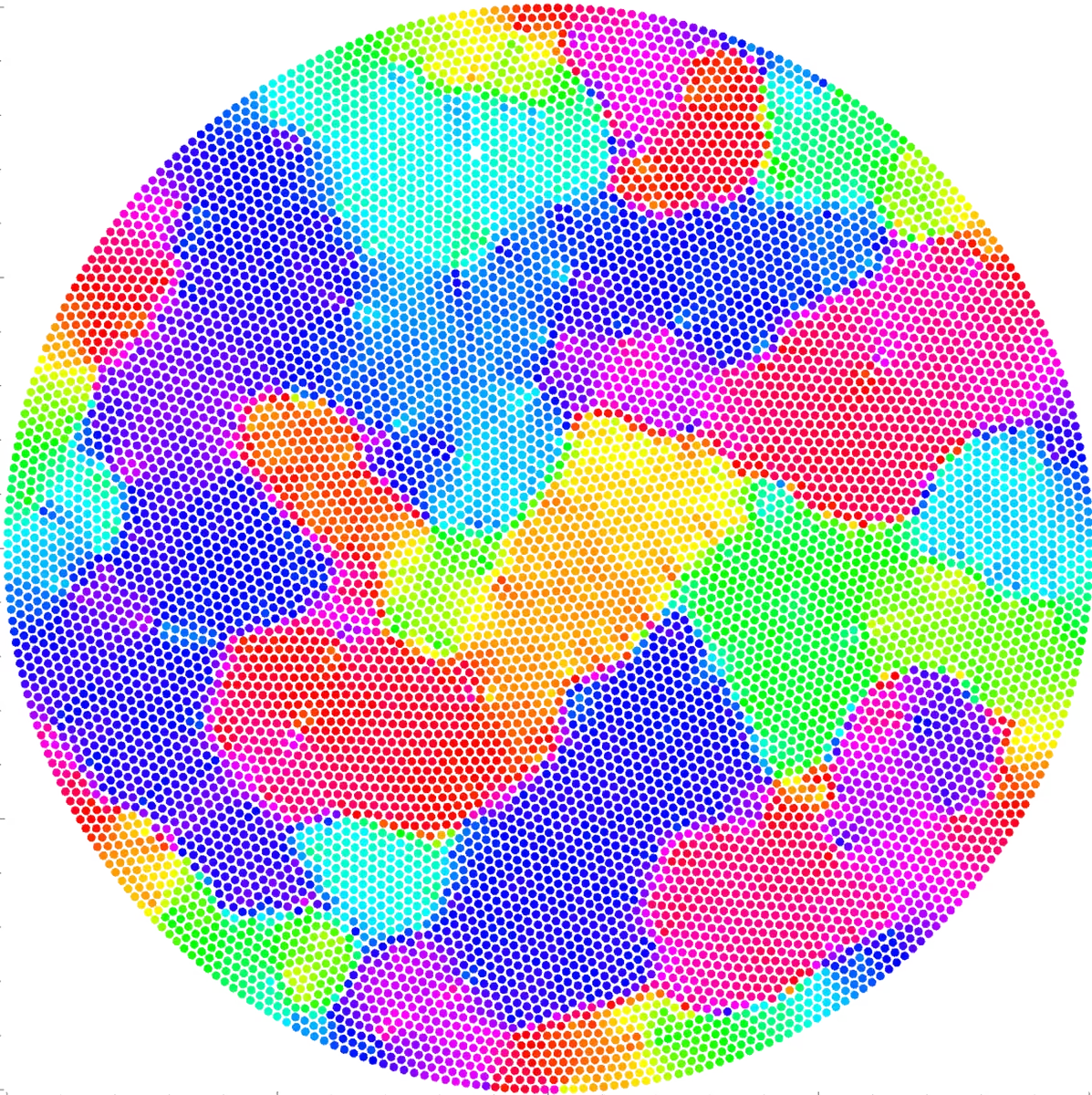
2D crystal with domains
Unnamed artist, 2025 — on hic et nunc
Ed. 1/10
Description
The computer-generated picture of a 2D crystal formed with mutually repelling particles. This system is kept intact by the rigid boundaries, otherwise, the particles would go far away from each other because of the repulsion. The minimal energy requires that each particle is surrounded by six neighbors forming a hexagon. In addition, near the rigid boundary, the bonds between the particles should be parallel to the boundary. In the case of a circular boundary, this leads to the so-called frustration, and the system splits in domains with differently oriented hexagons. Here, domains a color coded according to their orientation.
On-chain
Market
Provenance
Collectors